



Mobility Testing Driver Training Spain: VIP Chauffeur Accessibility
Booking a chauffeur is usually straightforward: pick a car, confirm a time, and travel. For clients with limited mobility, that process needs one more step. Mobility testing driver training in Spain fills that gap, giving VIP travellers, event guests, and corporate delegates a way to confirm that a vehicle, driver, and route genuinely fit their access needs before a booking is locked in. Spain Chauffeur builds accessibility into the same discretion and reliability standard that its wider VIP service is known for, rather than treating it as an afterthought.
What Is Mobility Testing and Why It Matters for VIP Transport
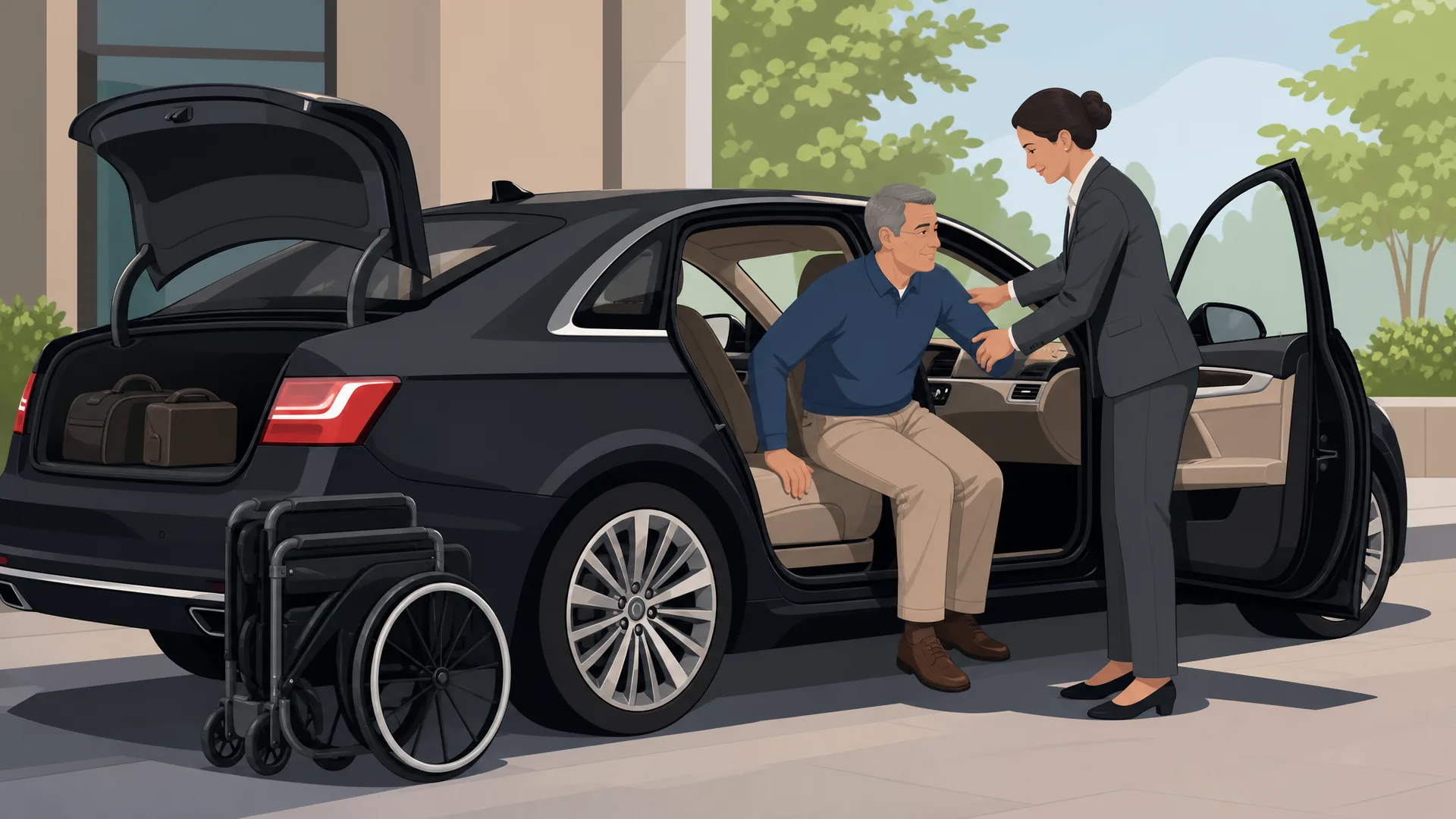
Mobility testing is a pre-booking assessment. It looks at a client’s physical access needs, how those needs interact with a specific vehicle, and what support the chauffeur or accompanying personnel should provide on the day. It covers practical questions: Can a wheelchair fold and fit in the boot alongside luggage? Does the client need a firmer seat height, extra time at the kerb, or a hand to steady a transfer? Is there space for a walking frame, crutches, or oxygen equipment?
Spain Chauffeur’s mobility testing service pairs trained CPO personnel with clients to assess vehicle access, transfer techniques, and equipment needs before a booking is confirmed. That assessment happens before the travel date, not on the roadside. That’s what separates it from a standard reservation.
Disability Mobility Testing vs. Standard Chauffeur Booking
A standard chauffeur booking confirms a pickup time, a destination, and a vehicle class. Disability mobility testing goes further. It asks how the client will move from the front door to the vehicle, how long that transfer typically takes, and whether any equipment needs to travel with them. It also flags whether the chauffeur should offer physical assistance, wait at a specific entrance, or coordinate with venue staff in advance. None of this is guesswork. It’s confirmed with the client ahead of time, so the day of travel holds no surprises.
How the Adaptive Driving Assessment Process Works
An adaptive driving assessment is not a medical exam. It’s a structured conversation and vehicle check that happens in stages, so both the client and the chauffeur team know exactly what to expect.
Pre-Booking Consultation and Needs Review
The process starts with an enquiry, usually made when the client first contacts Spain Chauffeur about a trip. During this consultation, the team asks about mobility aids in use, whether the client can transfer independently or needs assistance, and any equipment that must travel in the vehicle. This is also the point where the client can mention preferences, such as which side of the car is easier to approach, or whether a companion will be travelling too. The answers shape which vehicle and which driver are assigned to the job.
On-the-Day Vehicle and Transfer Checks
Before the client arrives, the chauffeur or CPO team confirms the vehicle is configured correctly: seat position adjusted, boot space cleared for equipment, and any ramp or transfer aid ready if agreed in advance. On arrival, the driver checks in with the client, confirms the transfer plan matches what was discussed, and adjusts on the spot if circumstances have changed. This two-stage approach, consultation first and physical checks second, is what makes the assessment reliable rather than reactive.
Adaptive Solutions: Vehicles, Equipment and Support Options
Vehicle choice matters as much as driver conduct. A car that looks premium on paper can still be poorly suited to a passenger who needs a wide door opening, a higher seat, or extra room for a folded wheelchair.
Fleet Considerations for Passengers with Limited Mobility
Spain Chauffeur’s fleet is assessed against these practical needs during the mobility testing stage rather than assumed in advance. The Mercedes E-Class chauffeur fleet details page outlines the cabin space and boot capacity that make this vehicle a common choice for clients who need room for mobility aids alongside standard luggage. Where equipment is bulkier, or a client needs more transfer space, the consultation stage is used to confirm the most suitable option in the fleet rather than defaulting to a single vehicle type. The goal stays the same: enough room, the right seat height, and a driver briefed on the transfer plan before the client ever reaches the kerb.
The Role of CPO Personnel in Mobility Testing Services
Close protection officers bring a particular set of skills to mobility support that a standard driver does not necessarily have. They’re trained to read a situation, plan a route with contingencies, and stay alert to a client’s surroundings, all while remaining unobtrusive.
Training That Combines Security Awareness With Accessibility Support
Close protection personnel trained in mobility support learn to combine security awareness with safe, dignified physical assistance techniques. A CPO assisting a client from a hotel entrance to a vehicle is doing two jobs at once: managing the physical transfer safely, and keeping an eye on the wider environment. This dual focus is why driver training for mobility needs has become a standard part of CPO preparation at Spain Chauffeur, rather than a separate add-on course. Clients who already rely on close protection security transport in Madrid for discretion and safety get the same standard of care when mobility support is added to the brief.
Who Benefits from Mobility Testing Services in Spain
Mobility testing is relevant to a wider group of travellers than the term might suggest. Across the EU, a meaningful share of travellers report some form of reduced mobility or disability. That’s why accessible transport planning has become a routine part of premium travel logistics rather than a niche request. The European Commission’s work on accessibility reflects how mainstream this planning has become across member states, Spain included.
VIP Travellers
A VIP client using a wheelchair or walking aid can request a pre-arrival mobility assessment so the chauffeur team confirms the right vehicle configuration, ramp or transfer support, and luggage space in advance. This applies equally to a business executive flying into Madrid for a single meeting and a private client on an extended stay who needs consistent support across several transfers. In both cases, the same discreet VIP transport for high-profile clients standard applies, with mobility needs folded into the plan rather than handled as an exception.
Event Planners and Wedding Parties
Event planners organising weddings or corporate functions increasingly ask chauffeur providers to confirm mobility testing for guests with limited mobility ahead of the event day. A wedding party might include an elderly relative who needs a slower transfer pace, or a guest with a mobility aid who needs advance confirmation that the vehicle can accommodate it. Coordinating this through a wedding chauffeur service for guests with accessibility needs means the planner can focus on the rest of the day, confident that transport is handled. Corporate delegations bring a similar need: a group travelling for a conference may include a delegate who requires adaptive transport, and this is typically arranged through the same booking process used for corporate transport services in Madrid.
Booking Accessible Transport Testing With Spain Chauffeur
Arranging mobility testing in Madrid or elsewhere in Spain works best when it starts early. As a general guide, clients should raise mobility needs during the initial enquiry, ideally several days before travel, so there is time to confirm the right vehicle and brief the driver or CPO team properly. For complex itineraries involving multiple transfers, more lead time gives the team room to plan each stage in detail.
To request an assessment, contact Spain Chauffeur directly and describe the mobility aids or equipment involved, along with the transfer points expected during the trip. From there, the team can walk through vehicle options, confirm CPO support if needed, and set out exactly what to expect on the day. This sits within the full range of chauffeur service options in Spain, so mobility testing can be combined with any other service already planned for the trip.
Clients planning travel across Madrid or wider Spain who need accessible transport, whether for a single transfer or a full itinerary, are welcome to get in touch to arrange a mobility testing assessment with trained CPO personnel ahead of their journey.